
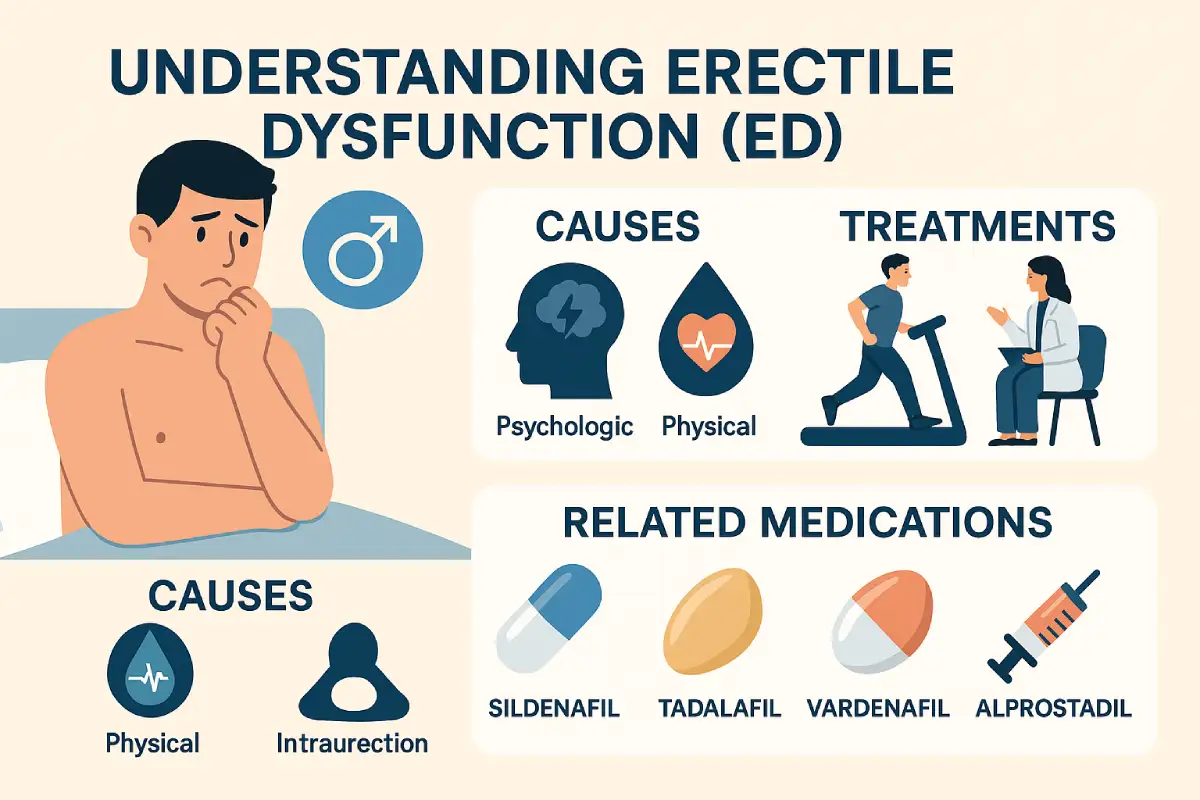
Understanding Erectile Dysfunction (ED): Causes, Treatments & Related Medications
Erectile dysfunction (ED) is a common condition in which a man struggles to achieve or maintain an erection sufficient for satisfactory sexual performance. While it may feel embarrassing or isolating, ED is a medical issue — not a personal failing — and many effective treatment routes exist.
What is Erectile Dysfunction?
Erectile dysfunction ED (sometimes called impotence) means that a man:
-
Frequently cannot get a firm erection when desired, or
-
Gets an erection but cannot maintain it long enough for meaningful sexual activity.
This condition is more common than many realise and can affect men of all ages, although prevalence increases with age. For example, it is estimated that between 40 and 70 years of age, over 50% of men report some degree of ED.
Why Does ED Occur? (Causes & Risk Factors)
Erection involves a complex interaction of the brain, nerves, hormones, blood vessels, and muscles. When something interferes with any of these systems, ED may result.
Here are the key causes and risk factors:
Physical / organic causes
-
Vascular problems: Conditions that impede blood flow to the penis (e.g., atherosclerosis, high cholesterol, high blood pressure) are among the most common causes of ED.
-
Diabetes: Especially harmful because it damages both blood vessels and nerves (neuropathy).
-
Hormonal issues: Low testosterone, thyroid problems and other endocrine disorders can impair erectile function.
-
Neurologic causes: Diseases or injuries affecting nerves (stroke, multiple sclerosis, spinal cord injury) may lead to ED.
-
Medication side-effects: Some drugs (for blood pressure, mood disorders, etc.) may reduce sexual function.
-
Lifestyle factors: Smoking, excessive alcohol use, obesity, lack of physical activity all raise risk.
Psychological causes
-
Stress, anxiety, depression, relationship issues, performance anxiety — any of these can contribute to or cause ED.
-
Note: In many men, Erectile dysfunction (ED) is caused by a mix of physical and psychological factors. Mayo Clinic+1
Other risk-factors
-
Age: As men age, the chance of ED increases — partly due to accumulating health issues.
-
Sleep disorders: Especially obstructive sleep apnea can be associated with ED.
-
Surgical or trauma history: For example prostate surgery or pelvic injury may affect nerves or blood supply.
How Is Erectile dysfunction Diagnosed?
Diagnosis usually begins with a medical and sexual history plus physical exam. Your doctor may ask: how often you get erections (morning or spontaneous), how firm they are, how long you maintain them, and whether you have other medical problems.
Additional tests may include:
-
Blood tests (glucose, cholesterol, testosterone)
-
Imaging or penile Doppler to assess blood flow (in some cases)
-
Evaluation of psychological factors or counselling referral.
It’s essential to identify why ED is happening — because treating the root cause often improves the outcome.
Treatment & Management of Erectile dysfunction
There is no one-size-fits-all solution, but a range of approaches exist — from lifestyle changes to medications and, in some cases, surgery. The choice depends on underlying causes, patient preferences, partner involvement, and medical suitability.
Lifestyle & non-medication interventions
Before jumping to pills, many guidelines emphasise this:
-
Quit smoking and limit alcohol; smoking damages blood vessels, alcohol may blunt sexual response.
-
Exercise regularly, especially aerobic workouts (brisk walking, jogging, cycling) to improve vascular health.
-
Maintain a healthy weight and manage conditions like diabetes, high blood pressure, high cholesterol.
-
Address psychological factors: stress, anxiety, depression, relationship issues. Sex therapy or counselling may be helpful
Medications
Several medications are used for Erectile dysfunction — but they must be prescribed and monitored by a healthcare provider. Some of the main types:
-
Phosphodiesterase type-5 (PDE5) inhibitors: such as Sildenafil (Viagra), Tadalafil (Cialis), Vardenafil (Levitra) etc. These improve blood flow to the penis.
-
Testosterone therapy: if low testosterone is contributing.
-
Injectable or intra-urethral medications: For cases where oral drugs don’t work, medications like Alprostadil (Caverject) may be injected into the penis or inserted as a suppository. Vacuum erection devices: A mechanical device that draws blood into the penis and holds the erection via a ring.
-
Surgery or penile implants: As a last resort when other treatments fail.
Important notes & precautions
-
Always consult a qualified healthcare professional before starting or changing medicines. Some ED-medications may interact dangerously with other drugs (e.g., nitrates for heart disease).
-
Supplements marketed for “male enhancement” are not always safe, may contain unlisted ingredients, and are poorly regulated.
-
Even when ED treatment is successful, the underlying health issues (heart disease, diabetes) must still be addressed. ED can be a “canary in the coal mine” for vascular disease.
Medicines Commonly Used for Erectile dysfunction
Here is a summary of key medications often prescribed for erectile dysfunction:
-
Sildenafil (Viagra) — the well-known oral PDE5 inhibitor.
-
Tadalafil (Cialis) — another PDE5 inhibitor; may last longer than some others.
-
Vardenafil (Levitra) — similar PDE5 class, different onset/timing.
-
Alprostadil — injectable or urethral suppository option when oral meds are ineffective.
-
Testosterone replacement therapy — only if low testosterone is confirmed and appropriate per doctor.
Always discuss with your doctor: which medication is suitable, side effects, how to use, and any contraindications, especially if you have cardiovascular issues.
Prevention & Tips for Supporting Sexual Health
While not every case of ED can be prevented, many of the risk factors are modifiable. Consider:
-
Eating a heart-healthy diet (fruits, vegetables, whole grains, lean protein)
-
Maintaining regular physical activity
-
Getting good sleep
-
Reducing stress
-
Avoiding smoking and limiting alcohol
-
Keeping chronic diseases (diabetes, hypertension, high cholesterol) under control
These steps not only support sexual health but also overall health and lifespan.
Final Thoughts
ED is more than just a bedroom issue: it can reflect important underlying health problems. The good news is that with open communication with your healthcare provider, many men find effective treatments and regain satisfying sexual function. If you or a partner are affected, don’t wait — early evaluation improves outcomes.
